
About MNIT – The Knowledge Partner
The institute was jointly established in 1963 as Malviya Regional Engineering College Jaipur by the Government of India and the Government of Rajasthan. Subsequently, on 26th June 2002 the college was given the status of National Institute of Technology. On 15th August 2007 it was recognised as the Institute of National Importance through an Act of Parliament. The institute is fully funded by the Ministry of Education (Shiksha Mantralaya) Government of India. MNIT Jaipur holds ARIIA ranking band EXCELLENT and is 42nd nationally in the NIRF ranking 2025 (Engineering category).
About Rajasthan State Pollution Control Board – The Agency
Constituted under Section 4 of the Water (Prevention and Control of Pollution) Act, 1974 and first formed on 7 February 1975 — works to prevent and control water pollution and restore water quality. Its mandate was later expanded to include prevention, control and abatement of air pollution under the Air (Prevention and Control of Pollution) Act, 1981; the Water (Prevention and Control of Pollution) Cess Act, 1977 enables the Board to collect cess for financial autonomy. The Environment (Protection) Act, 1986 further widened its scope, and the Board now implements the various rules framed under the EPA to regulate and protect Rajasthan’s environment.
About Rajasthan Green Innovation Challenge (RGIC)
The Rajasthan Green Innovation Challenge (RGIC) is a targeted programme to surface, validate and accelerate locally-relevant technical and behavioural innovations that address pollution and environmental monitoring challenges across Rajasthan. RGIC brings together students, startups, MSMEs, researchers and regulators to convert early-stage solutions into field-tested prototypes and policy-ready demonstrations.

Why RGIC?
- Policy-linked testing: Work directly with regulators to test solutions against practical metrics.
- Resource support: Mentorship, lab/testing access and prototyping grants.
- Pilot pathways: Selected teams can pilot their solutions at real sites with Agency facilitation.
- Scale potential: Prototype data and demonstration outcomes feed into procurement, incubation and investment pathways.
Objectives
- Accelerate the development of affordable, scalable pollution-control and monitoring technologies.
- Enable data-driven regulatory decision-making through validated pilots.
- Build an ecosystem that connects innovators, industry clusters, municipalities and civil society.
- Create a pipeline of investable ventures and transferable technologies for state-wide scale-up.
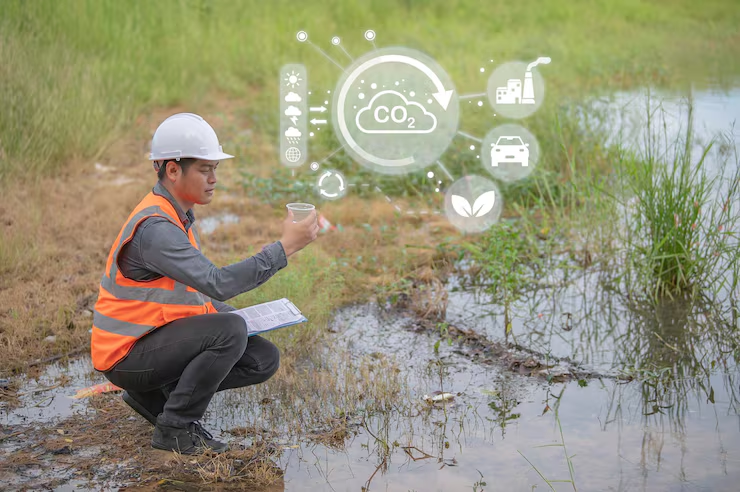
Thematic Areas
-
 Air Quality: Low-cost ambient & stack sensors, dust suppression, community early-warning.
 -
 Industrial Effluent & Onsite Treatment: Modular, low-footprint treatment, effluent reuse, small-scale alternatives to full ZLD.
 -
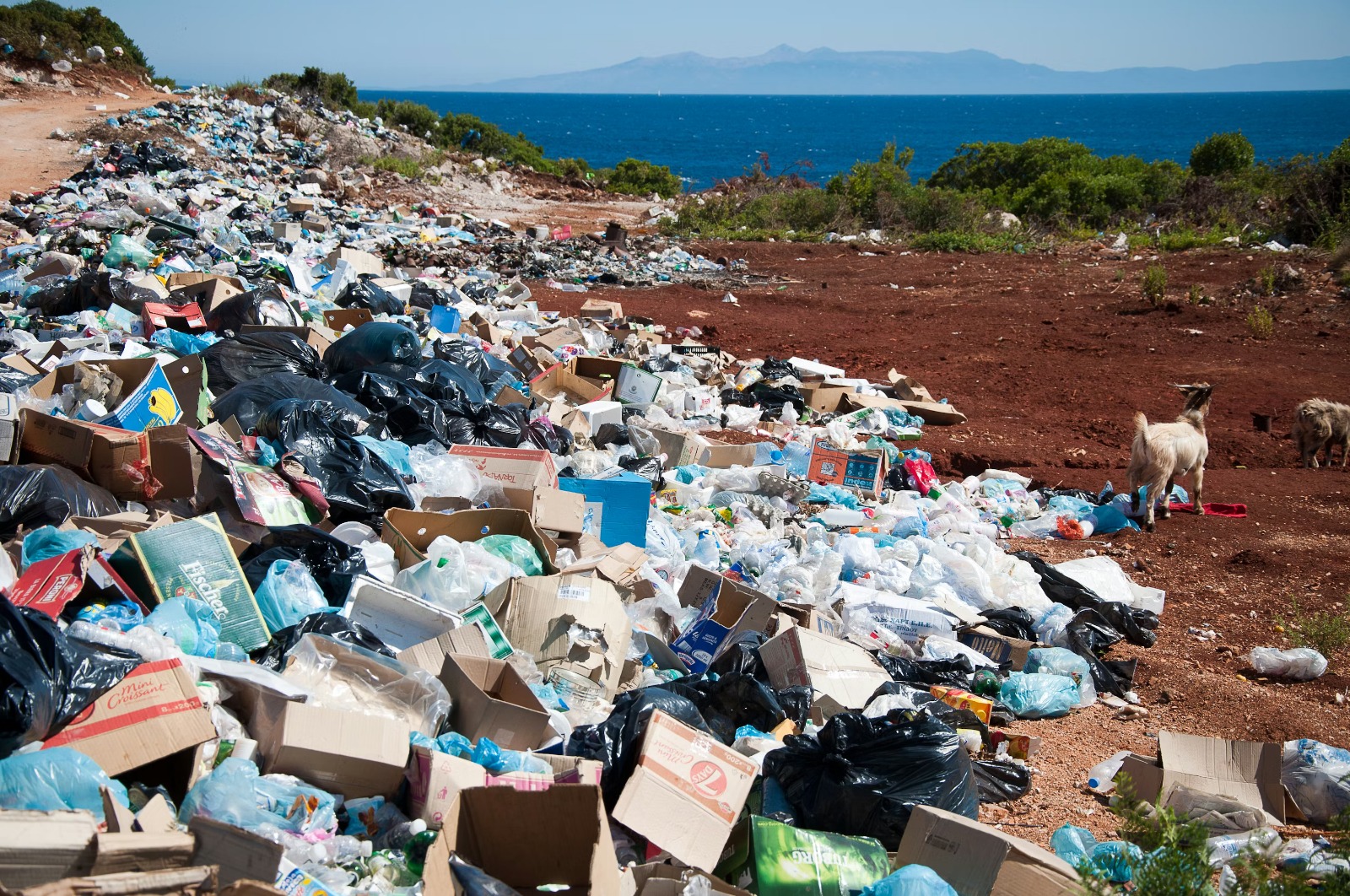 Solid Waste & Circularity: Decentralised composting, MRFs at ward/colony level, e-waste models.
 -
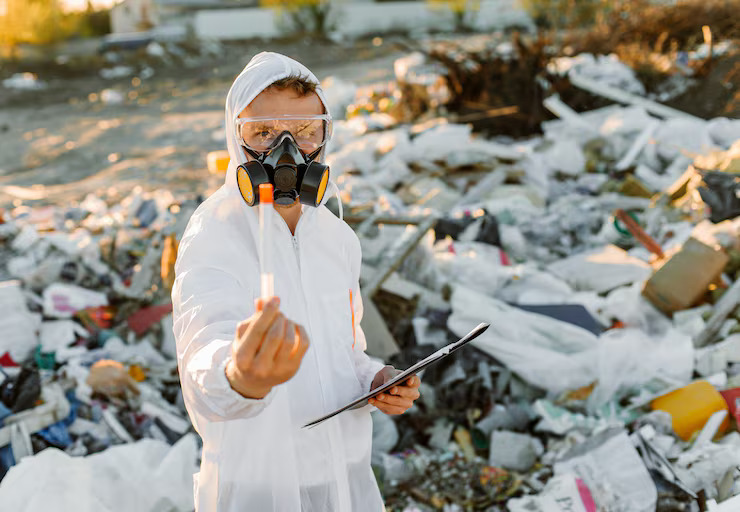 Monitoring & Compliance: IoT sensor networks, remote-sensing analytics, GIS mapping, automated dashboards.
 -
 Behavioural & Governance Interventions: Citizen reporting platforms, compliance incentives.
 -
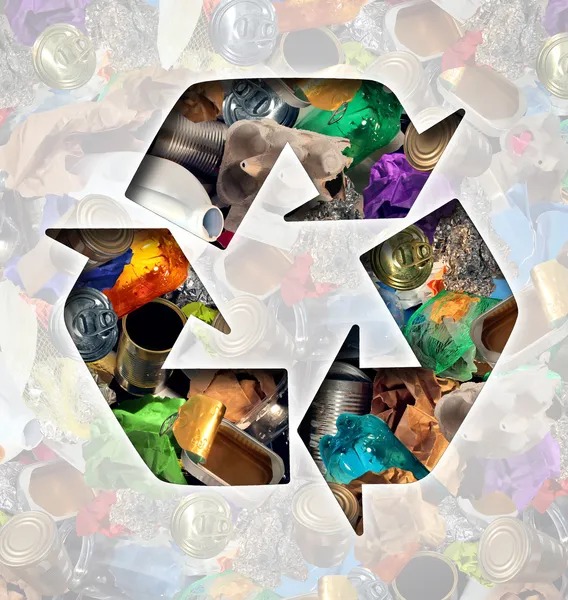 Energy–Waste Nexus: Micro waste-to-energy and energy-efficient pollution-control approaches.


Hackathon Timeline
Registration & Initial Screening (Online)
Call for proposals; up to 100 teams shortlisted.
Idea Pitch (Online)
8-10-minute presentations; up to 50 teams advance to next stage.
Development Showcase (Online)
Mentored 2-week build period; technical presentations; up to 20 teams shortlisted and each awarded ₹20,000 for prototyping.
Final Pitch & Demo (Offline)
4 weeks of prototype development ; onsite demo, awards and selection of top 3 winners; work orders of up to ₹25 Lakh or startup support (as per RSPCB guidelines).
Note: Exact dates for Initial Screening, pitch rounds and final demo will be posted on the registration portal.
Starting Date of Registration: 20th March 2026
Registration Closes on: 31st March 2026 09th April 2026
Hackathon Offerings

What participants receive
- Structured mentorship from domain experts and technologists from MNIT and RSPCB
- Prototyping grant for shortlisted teams (₹20,000 each)
- Certificates and Media Visibility at demo day
- Field pilot opportunities facilitated by the Agency
- Access to testing facilities and incubation support
- Potential work orders (Upto ₹25 Lakh *) or state-supported startup assistance for top winners
Mentorship
Mentors: Domain specialists from MNIT, Industries and other institutes in air, water, waste management, environmental monitoring and policy.
Intellectual Property & Data
- If developed individually, innovators retain ownership of their intellectual property. If developed in association with mentors or agency experts utilizing their resources in that the ownership of IP will be held jointly.
- Participants must ensure that submitted ideas do not infringe on third-party IP rights.
- RGIC organisers shall have limited rights to use:
- Pilot data
- Demonstration results
- Non-confidential project summaries
- For regulatory evaluation, reporting, and non-commercial promotional purposes.
Pilot Site & Implementation Support
The RSPCB will help identify pilot sites based on thematic relevance, representativeness, logistical feasibility and willingness of local authorities/industry partners to collaborate. Successful pilots aim to generate monitoring datasets and operational insights that inform regulatory actions and scale-up decisions.
How to apply (steps)
- 1. Form a team (2–5 members).
- 2. Complete the online registration form: project title, brief problem statement, context, challenges and expected outcomes.
- 3. Submit a short team profile and any supporting materials (sketches, previous results, videos) through registration link containing a google form.
- 4. Shortlisted teams at each stage will be invited to online/offline pitch rounds (refer Programme structure & timeline above).
- 5. Follow the portal for notifications, mentoring schedules and evaluation outcomes.
Important notes
- Open to teams across India.
- Shortlisted teams receive a certificate of participation at each stage.
- Funding figures and award terms are subject to official guidelines and final approvals.
- See the full Terms & Conditions, Rules & Regulations and IP/Data policy on the portal.
DOWNLOADS
FAQs
Contact Us
If you have any query please drop us an email at greeninnovation@mnit.ac.in or call us at below numbers, we would be happy to assist you.
Mr. Shekhar Dhuliya: +91-8630174009
Mr. Deepak Dhaka: +91-8000282119
* Terms and Conditions apply

MNIT Jaipur has established a Technology Business Incubator (TBI) sponsored by DST GOI, New Delhi in December 2016.
QUICK LINKS
Events
Contact Us
Malaviya National Institute of Technology Jaipur Campus
JLN Marg, Jaipur-302017
Phone: +91-9828199938
Email: miic@mnit.ac.in
Stay Connected
2026 © All Rights Reserved.
Website Total Visiter:1762691